
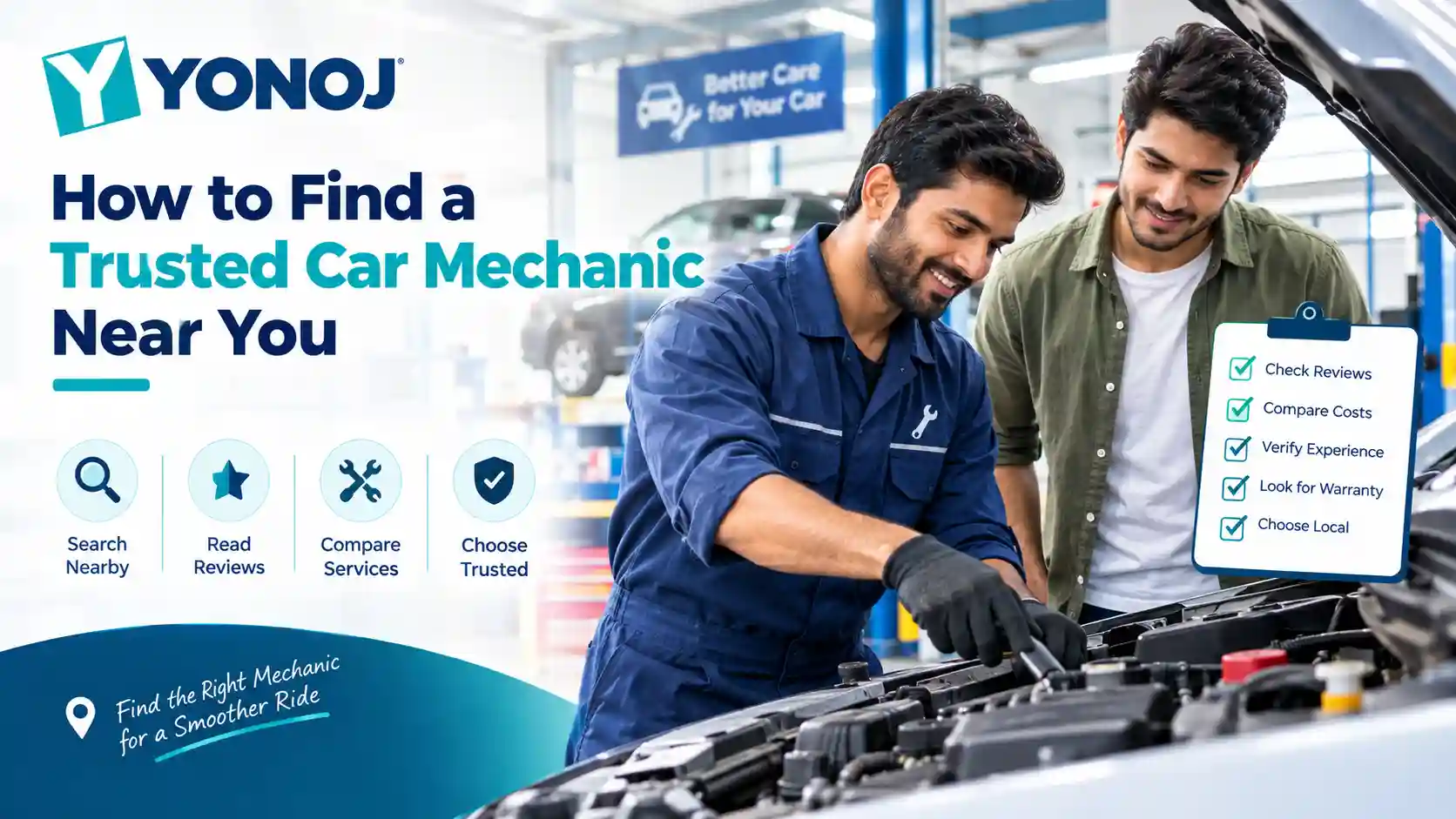
Finding a reliable car mechanic is essential for keeping your vehicle safe, efficient, and in good condition. Whether you need a routine oil change, brake repair, engine diagnosis, or emergency servicing, choosing the right mechanic can save you time and money.
If you are searching for a car mechanic near me, it is important to compare local garages, check customer reviews, understand repair costs, and verify the mechanic’s experience before handing over your vehicle.
In this guide, we will explain how to find a trusted car mechanic near you and what to check before booking a service.
1. Search for Local Car Mechanics
Start by searching online for car mechanics and garages in your area. Choosing a nearby workshop can make it easier to drop off your vehicle, discuss repairs, and return for follow-up servicing.
You can explore local service providers through the Yonoj local business directory, where you can start looking for businesses and services in your area.
When comparing nearby mechanics, consider their location, services offered, customer feedback, and availability.
2. Check Customer Reviews and Ratings
Customer reviews can help you understand the quality of service a garage provides. Look for feedback from people who have used the mechanic for similar repairs.
Pay attention to comments about:
- Quality of repairs and servicing.
- Transparency in pricing.
- Staff behaviour and communication.
- Timely delivery of vehicles.
- Handling of complaints and follow-up issues.
Do not rely on star ratings alone. Read recent reviews and look for consistent feedback across different sources.
3. Verify the Mechanic’s Experience
Different mechanics may specialise in different types of vehicles and repairs. Before booking, check whether the workshop has experience with your car’s make, model, and engine type.
Ask whether the mechanic can handle the service you need, such as:
- Routine maintenance and oil changes.
- Brake and suspension repairs.
- Battery and electrical problems.
- Engine diagnostics.
- Air-conditioning repairs.
- Clutch, transmission, and steering issues.
For modern vehicles with advanced electronics, choose a workshop with suitable diagnostic equipment and relevant technical experience.
4. Compare Repair Costs Before Approving Work
Repair costs can vary between workshops depending on the problem, spare parts, labour, and vehicle model.
Before agreeing to a repair, ask for an estimate that separates labour charges, spare parts, taxes, and any additional fees.
A trustworthy mechanic should explain the issue, discuss the available repair options, and seek your approval before carrying out extra work.
Be cautious of unusually low quotes that do not clearly explain what is included. The cheapest option is not always the best value.
5. Ask About Spare Parts and Warranty
Spare parts can affect your vehicle’s reliability and repair cost. Ask whether the workshop uses original equipment manufacturer (OEM), genuine, or aftermarket parts and understand the differences before deciding.
You should also ask:
- Whether parts are new or refurbished.
- Whether you can see the replaced parts.
- Whether the repair includes a warranty.
- How long the warranty lasts and what it covers.
- Whether you will receive an itemised invoice.
Keep all invoices and warranty documents in case you need follow-up repairs.
6. Look for Clear Communication and Professional Service
A reliable car mechanic should explain the problem in language you can understand. They should tell you which repairs are urgent, which can wait, and what may happen if a repair is delayed.
Before leaving your car at the workshop, confirm the estimated completion time, total expected cost, and contact details.
Avoid workshops that pressure you into unnecessary repairs or refuse to explain their recommendations.
7. Check the Garage’s Facilities and Credentials
If possible, visit the workshop before making your decision. A clean and organised garage can be a positive sign, although appearance alone does not guarantee quality.
Check whether the garage has the tools and equipment needed for your repair. For specialised work, ask about relevant training, certifications, or manufacturer authorisation.
Also confirm that your vehicle’s details, repair instructions, and any existing damage are recorded before the work begins.
8. Understand the Warning Signs of an Unreliable Mechanic
Be careful if a mechanic:
- Refuses to provide a written estimate.
- Adds unexpected charges without approval.
- Recommends major repairs without explaining the diagnosis.
- Cannot provide an invoice or details of parts used.
- Repeatedly misses promised delivery times without communication.
- Makes guarantees that seem unrealistic.
If you are unsure about an expensive repair, consider getting a second opinion before proceeding.
9. Choose a Mechanic Who Understands Your Car
The right mechanic should understand your vehicle’s maintenance requirements and help you keep a record of completed repairs.
For regular servicing, ask whether the workshop follows the manufacturer’s recommended maintenance schedule. For older cars, look for experience with your model and the types of issues it commonly develops.
Building a relationship with a dependable mechanic can make future maintenance easier and help you identify problems early.
Quick Checklist Before Choosing a Car Mechanic
Use this checklist before booking your next repair:
-
The workshop has experience with your car model.
-
Customer reviews are generally positive and credible.
-
The mechanic explains the problem clearly.
-
You receive a written cost estimate.
-
Spare parts and warranty terms are explained.
-
Additional work requires your approval.
-
The workshop provides an itemised invoice.
-
The expected repair time is communicated clearly.
Frequently Asked Questions
1. How do I find a reliable car mechanic near me?
Search for local workshops, compare recent customer reviews, verify experience with your car model, and request a written estimate. You can also explore local service providers through the Yonoj business directory.
2. How much does a car mechanic charge?
The cost depends on the vehicle, type of repair, labour charges, and spare parts required. Ask for an itemised estimate before approving the work.
3. Should I choose an authorised service centre or a local mechanic?
Authorised service centres may be suitable for warranty-related work, manufacturer-specific repairs, or vehicles requiring specialised equipment. Independent garages may offer more flexibility or competitive prices. Compare the workshop’s expertise, service terms, and total cost before deciding.
4. How can I avoid unnecessary car repairs?
Ask the mechanic to explain the diagnosis, request an estimate, and approve additional work only after understanding the reason. For expensive or unclear repairs, consider a second opinion.
5. What should I check before leaving my car at a garage?
Record the vehicle’s condition, confirm the work required, agree on the estimated cost and completion time, and remove personal belongings. Keep a copy of the job card or service receipt.
Conclusion
Finding a trusted car mechanic near you becomes easier when you compare local garages, check customer feedback, verify experience, and understand repair costs before approving any work.
Do not choose a workshop based on price alone. Clear communication, suitable technical skills, transparent billing, and reliable after-service support are equally important.
To start exploring local businesses and services, visit Yonoj and look for options that match your location and vehicle’s needs.
Disclaimer: Service availability, prices, and repair warranties vary by workshop and vehicle. Confirm the details directly with the service provider before booking.