
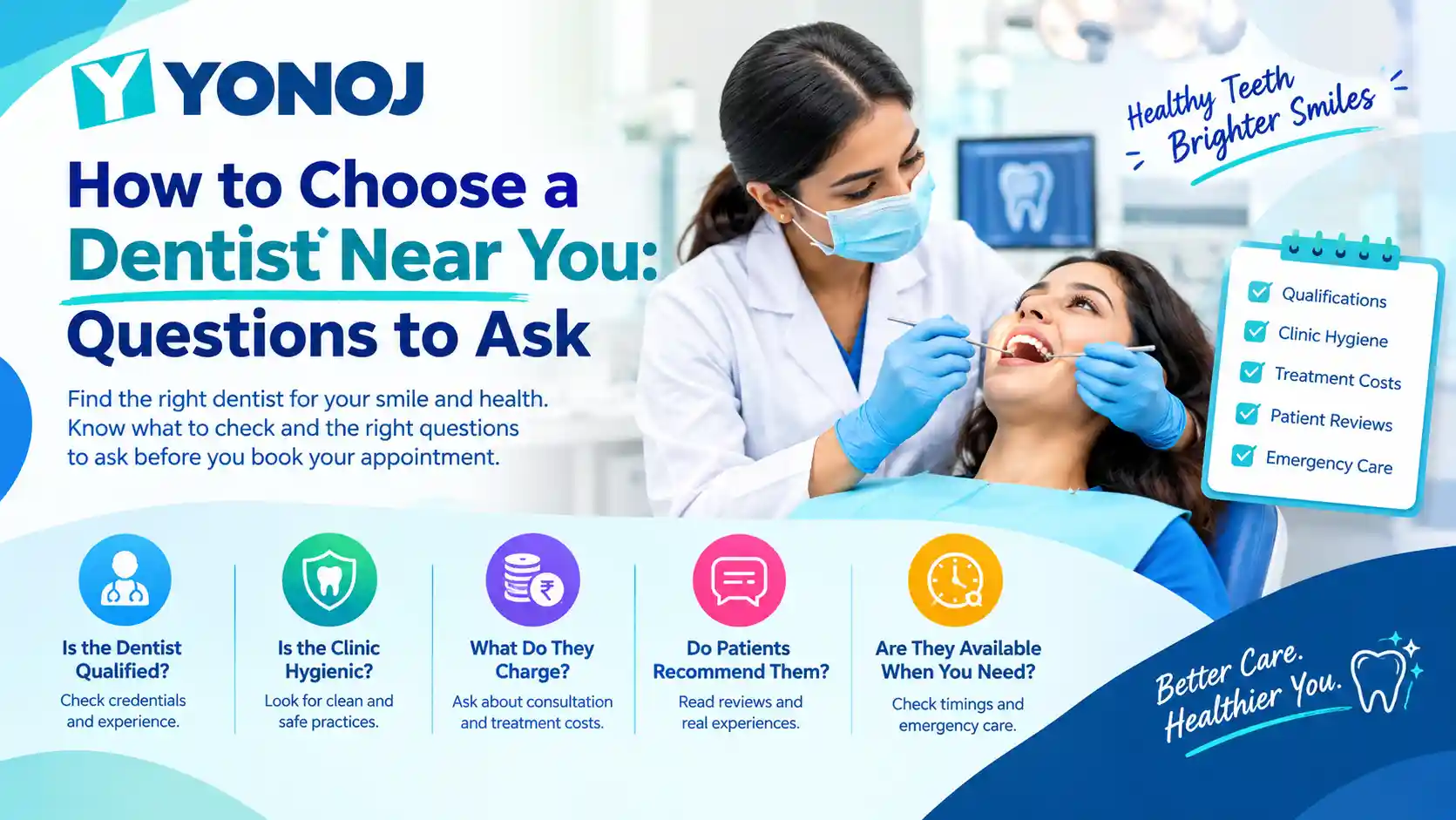
Finding the right dentist is an important step towards maintaining healthy teeth and gums. Whether you need a routine dental check-up, teeth cleaning, a filling, braces, or treatment for a toothache, choosing a qualified and trustworthy dentist can make your experience more comfortable.
When you search for a dentist near me, you may find many clinics offering different treatments and prices. But how do you know which dentist is right for you? A nearby clinic may be convenient, but you should also consider the dentist’s qualifications, clinic hygiene, treatment options, communication, and costs.
In this guide, Yonoj explains how to choose a dentist near you and shares important questions to ask before booking your appointment.
Why Is Choosing the Right Dentist Important?
Your dentist can help you maintain oral health, identify dental problems, and understand your treatment options. Building a long-term relationship with a dentist can also make it easier to discuss concerns and receive regular dental care.
The right dentist should:
- Have appropriate qualifications and professional registration.
- Explain your dental condition in simple language.
- Follow proper hygiene and infection-control practices.
- Discuss treatment options, risks, and costs before treatment.
- Listen to your concerns and answer your questions.
- Provide appropriate follow-up advice and emergency arrangements.
Choosing a dentist should involve more than selecting the clinic with the lowest price or the closest location.
1. Check the Dentist’s Qualifications and Experience
Before booking an appointment, check the dentist’s qualifications and experience. In India, you can ask about their recognised dental qualification, registration with the relevant State Dental Council, and experience with the treatment you need.
Different dental professionals may focus on different areas. For example, orthodontists specialise in correcting tooth alignment, while endodontists focus on treatments involving the inside of teeth, including root canal treatment.
If you need a specialised procedure, ask whether the dentist performs it regularly or refers patients to an appropriate specialist.
Questions to ask:
- What are your dental qualifications?
- Are you registered with the relevant State Dental Council?
- How much experience do you have with my dental concern?
- Do you provide this treatment at your clinic, or will I need a specialist?
A qualified dentist should be willing to explain their professional background and the treatment they are equipped to provide.
2. Check Clinic Hygiene and Safety
Clinic hygiene is an essential factor when choosing a dentist. Dental procedures involve instruments that come into contact with the mouth, so appropriate cleaning, sterilisation, and infection-control practices matter.
During your visit, observe whether the clinic appears clean and organised. Notice whether the dental team follows appropriate hand hygiene and uses protective equipment when required.
Look for signs that instruments are properly sterilised and that disposable items are handled appropriately.
Questions to ask:
- How are dental instruments cleaned and sterilised?
- Are sterilised instruments stored appropriately?
- What infection-control procedures do you follow?
- How do you maintain cleanliness between patients?
Do not hesitate to ask reasonable questions about safety. A professional dental team should be able to explain its procedures clearly.
3. Ask About the Cost of Treatment
Dental treatment costs can vary depending on the clinic, location, materials, complexity of the procedure, and the dentist’s assessment.
For example, the cost of a filling may differ depending on the tooth and material used. Root canal treatment, crowns, braces, and dental implants may involve several appointments or additional expenses.
Before agreeing to treatment, ask for a clear estimate that explains what is included.
Questions to ask:
- What is the consultation fee?
- What is the estimated total cost of my treatment?
- Are X-rays, medicines, or follow-up appointments included?
- Are there different treatment options at different price points?
- Will I be informed if the estimated cost changes?
For more complex treatment, request a written treatment plan with the proposed procedure, expected number of visits, estimated costs, and relevant follow-up requirements.
Do not choose a dentist based on price alone. Consider qualifications, safety, communication, and the suitability of the recommended treatment as well.
4. Read Patient Reviews and Recommendations
Online reviews can help you understand other patients’ experiences with a dental clinic. Search for the clinic name and read reviews across relevant platforms.
Look for repeated comments about punctuality, staff behaviour, cleanliness, communication, and whether costs were explained clearly.
However, reviews should not be your only deciding factor. Online ratings do not independently prove a dentist’s qualifications or the quality of every treatment.
You can also ask friends, relatives, or colleagues about their experiences with dentists in your area.
Questions to consider while reviewing a clinic:
- Do patients mention clear explanations and respectful treatment?
- Are there repeated complaints about unexpected charges?
- Does the clinic respond professionally to concerns?
- Can you verify the clinic’s address and contact details?
Compare several clinics rather than relying on a single review or rating.
5. Check the Dental Services Available
Not every dental clinic provides every treatment. Some focus on general dentistry, while others offer specialised services or have visiting specialists.
Before booking, confirm that the clinic can assess your concern and provide the treatment you may need.
Common dental services include:
- Routine dental examinations.
- Teeth cleaning and preventive care.
- Tooth fillings and cavity treatment.
- Root canal treatment.
- Tooth extractions.
- Braces and orthodontic treatment.
- Dental crowns and bridges.
- Dental implants.
- Gum disease assessment and treatment.
- Cosmetic dental procedures.
Questions to ask:
- Do you treat my particular dental problem?
- Will I need an X-ray or further examination?
- Do you offer alternative treatments?
- Will you refer me to a specialist if necessary?
A dentist should explain why a treatment is being recommended and discuss suitable alternatives where available.
6. Choose a Convenient Location and Appointment Time
When searching for a dentist near you, location matters. A clinic close to your home, workplace, or college can make routine visits easier to manage.
Convenience may be particularly important if your treatment requires multiple appointments.
Before choosing a clinic, check its working hours, appointment availability, travel time, and parking or public transport access.
Questions to ask:
- What are your regular consultation hours?
- Do you offer appointments in the evening or on weekends?
- How far in advance should I book?
- How should I contact the clinic if I need to reschedule?
- What arrangements are available for urgent dental problems outside regular hours?
Choose a clinic whose schedule fits your routine and whose location is practical for any follow-up visits.
7. Find Out How the Dentist Handles Dental Emergencies
A dental emergency may involve severe tooth pain, a broken tooth, a dental injury, or swelling around the mouth.
Before choosing a dentist, ask how the clinic handles urgent problems. Some clinics provide emergency appointments, while others refer patients to a designated dental service.
Questions to ask:
- Do you accept urgent dental appointments?
- How can I contact the clinic outside regular hours?
- What should I do if a dental problem occurs after treatment?
- Do you provide follow-up care after an emergency procedure?
Severe facial swelling, difficulty breathing or swallowing, or rapidly worsening symptoms require urgent medical assessment. Do not delay emergency care while waiting for a routine dental appointment.
8. Make Sure the Dentist Explains Your Treatment Clearly
A good dental consultation should give you an opportunity to understand your condition and make an informed decision.
The dentist should explain the findings, the recommended treatment, its likely benefits and risks, and any reasonable alternatives. You should have time to ask questions before agreeing to proceed.
Be cautious if you feel pressured to accept an expensive procedure without a clear explanation.
Questions to ask:
- What is causing my dental problem?
- What happens if I delay or do not proceed with treatment?
- What are the benefits and risks of the recommended procedure?
- Are there suitable alternatives?
- How many appointments might be needed?
- What care will I need after the procedure?
You have the right to understand the proposed treatment and give informed consent before it begins.
9. Check Follow-Up Care and Communication
Some dental procedures require follow-up appointments, monitoring, or specific aftercare instructions. Before starting treatment, understand how the clinic will support you afterwards.
Ask how to contact the dental team if you experience unexpected symptoms or have questions about your recovery.
Questions to ask:
- Will I need a follow-up appointment?
- What aftercare instructions will I receive?
- Who should I contact if I have a concern after treatment?
- Can I obtain copies of my treatment records and X-rays when needed?
Clear communication can help you feel more prepared and understand the next steps in your dental care.
Checklist: Before Choosing a Dentist Near You
Use this checklist to compare clinics before making your decision.
-
Checked the dentist’s qualifications and professional registration.
-
Confirmed experience with the required treatment.
-
Observed clinic cleanliness and hygiene practices.
-
Read several patient reviews.
-
Asked about consultation fees and treatment costs.
-
Confirmed available services and treatment options.
-
Checked location, opening hours, and appointment availability.
-
Asked about emergency care and follow-up arrangements.
-
Understood the proposed treatment, risks, and alternatives.
-
Felt comfortable asking questions and discussing concerns.
Taking these steps can help you make a more informed choice.
How Yonoj Can Help You Find Dental Services Near You
Finding a suitable dentist becomes easier when you can explore local services and compare your options.
Yonoj helps users discover local businesses and services. You can use the platform to explore relevant dental service listings, where available, and review the information provided by individual clinics.
When comparing listings, check the dentist’s qualifications, clinic address, contact details, available services, and appointment arrangements directly with the provider.
Remember that a listing alone does not guarantee a clinic’s quality or verify its professional credentials. Complete your own checks before booking treatment.
Conclusion
Choosing the right dentist near you involves more than finding the closest clinic. You should consider qualifications, hygiene, experience, treatment costs, patient feedback, convenience, and the quality of communication.
Ask questions before booking and make sure you understand the proposed treatment and its estimated cost. A dentist who listens to your concerns and explains your options can help you make confident decisions about your oral health.
If you are looking for a dentist near me, explore available local dental service listings on Yonoj, compare suitable clinics, and contact the provider to confirm the details before making an appointment.
Frequently Asked Questions (FAQs)
1. How do I find the best dentist near me?
Start by checking professional qualifications, registration, experience, clinic hygiene, patient reviews, treatment costs, and location. Compare a few suitable clinics before deciding.
2. What questions should I ask a dentist before treatment?
Ask about your diagnosis, recommended treatment, benefits and risks, alternative options, estimated total cost, number of visits, and aftercare requirements.
3. How can I check whether a dentist is qualified in India?
Ask about the dentist’s recognised dental qualification and registration with the relevant State Dental Council. You can contact the appropriate council or use its official verification resources where available.
4. Should I choose a dentist based on online reviews?
Reviews can help you understand patient experiences, but they should not be your only consideration. Verify the dentist’s qualifications and compare the clinic’s services, hygiene, communication, and costs.
5. How much does a dental consultation cost in India?
Consultation fees vary by city, clinic, and dentist. Contact the clinic directly to confirm the current fee and ask whether examinations or diagnostic tests are charged separately.
6. How do I choose a dentist for my family?
Look for a qualified dentist who communicates clearly, follows proper hygiene practices, offers services appropriate for your family members, and has convenient appointment hours. Confirm whether the clinic treats children if you need paediatric dental care.
7. When should I seek urgent dental care?
Seek prompt dental assessment for severe tooth pain, a broken tooth, dental injury, or significant swelling. Difficulty breathing or swallowing, or rapidly worsening facial swelling, requires emergency medical care.