
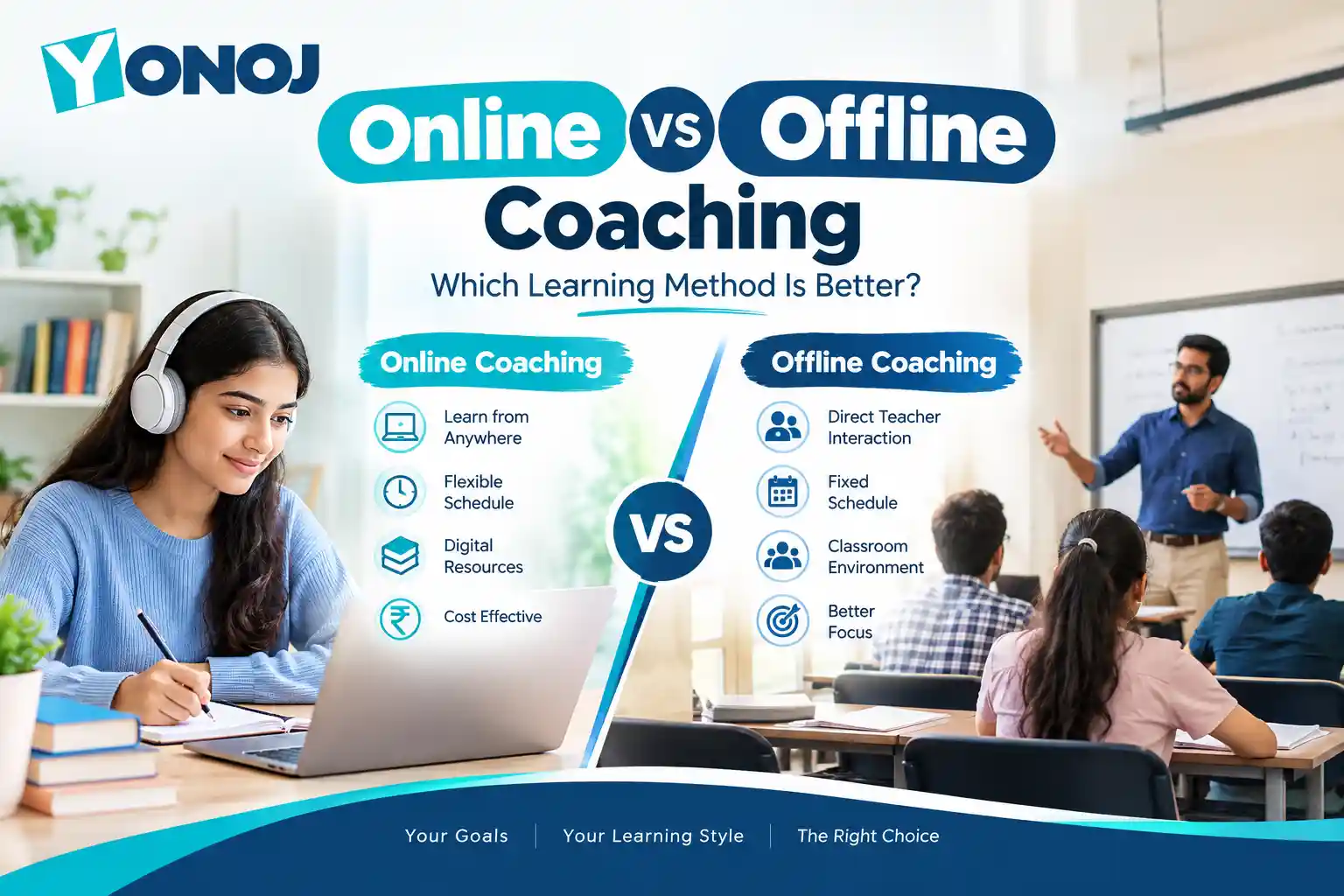
Choosing between online and offline coaching can be confusing, especially when you want to improve your skills, prepare for competitive exams, or achieve better academic results. Both learning methods offer valuable benefits, but the right choice depends on your learning style, schedule, budget, and educational goals.
With online education becoming more accessible and traditional coaching institutes continuing to attract students, it is important to understand how these two methods differ.
In this guide, we will compare online vs offline coaching, including their advantages, disadvantages, costs, flexibility, and learning experience, to help you make the right decision.
What Is Online Coaching?
Online coaching is a learning method in which students attend classes through the internet using a smartphone, laptop, tablet, or computer. Classes may be conducted through live video sessions, recorded lectures, online tests, and digital study materials.
Students can learn from teachers and coaching institutes without travelling to a physical classroom. This makes online coaching especially useful for students who live far from major educational centres.
Advantages of Online Coaching
- Flexible learning: Students can access recorded lectures and study materials at convenient times when these options are available.
- Saves travel time: Learning from home reduces the time and effort spent commuting.
- Access to more teachers: Students can explore courses offered by educators and institutes in different cities.
- Digital study resources: Notes, practice tests, recorded lessons, and progress reports may be available on one platform.
- Convenient revision: Recorded sessions can help students revisit difficult topics before examinations.
Disadvantages of Online Coaching
Online learning also has some challenges. Students may experience distractions at home, internet connectivity problems, or limited personal interaction with teachers. It also requires self-discipline and regular study habits to stay consistent.
What Is Offline Coaching?
Offline coaching is a traditional classroom-based learning method in which students attend scheduled classes at a coaching institute. They interact directly with teachers, ask questions, participate in discussions, and learn alongside other students.
This approach is popular among students who prefer a structured classroom environment and face-to-face guidance.
Advantages of Offline Coaching
- Direct interaction: Students can ask questions and receive explanations from teachers during class.
- Structured routine: Fixed class timings encourage regular attendance and consistent study habits.
- Better classroom engagement: Group discussions, classroom activities, and peer learning can improve understanding.
- Fewer digital distractions: Students may find it easier to concentrate in a dedicated learning environment.
- Immediate feedback: Teachers can often identify doubts and provide guidance during lessons.
Disadvantages of Offline Coaching
Offline coaching requires students to travel to the institute, which can increase daily expenses and reduce available study time. Fees may also be higher when additional costs such as transportation, accommodation, and printed materials are considered. Students may have fewer options to revisit a lesson unless recordings or additional classes are provided.
Online vs Offline Coaching: Key Differences
Understanding the main differences can help you choose the learning method that suits your needs.
| Comparison Factor | Online Coaching | Offline Coaching |
|---|---|---|
| Learning location | Home or any suitable place | Physical classroom |
| Schedule | Often flexible, depending on the course | Usually fixed class timings |
| Teacher interaction | Through video calls, chats, or forums | Face-to-face interaction |
| Travel | Generally not required | Usually required |
| Study materials | Mostly digital | Digital or printed |
| Learning environment | Requires self-discipline | Provides a structured routine |
| Peer interaction | Through online groups and discussions | Direct classroom interaction |
| Revision | Recorded lectures may be available | Depends on institute facilities |
| Overall cost | Often lower, but varies | May include travel and other expenses |
Neither method is automatically better for every student. The quality of teaching, course structure, practice opportunities, and student commitment can matter more than the learning format alone.
Online vs Offline Coaching: Which Is More Affordable?
Cost is an important factor when comparing online vs offline coaching.
Online coaching can be more affordable because students may save money on transportation, accommodation, and printed materials. Many courses also offer different pricing options, allowing students to choose according to their budget.
Offline coaching may involve tuition fees along with travel expenses, meals, accommodation, and other study-related costs. However, some local institutes offer affordable fees and personalised support.
Before enrolling, compare the complete cost rather than looking only at the course fee. Check whether the price includes study materials, mock tests, doubt-clearing sessions, and revision classes.
Tip: Choose a coaching programme based on teaching quality and learning support, not simply the lowest price.
Which Coaching Method Is Better for Competitive Exams?
The best coaching method for competitive exams depends on the examination, your preparation level, and the support you need.
Online Coaching for Competitive Exams
Online coaching can be suitable for students preparing for exams such as JEE, NEET, UPSC, SSC, and banking examinations. It provides access to video lessons, online mock tests, and digital practice resources.
It may be particularly useful for students who already have a study routine and can prepare independently.
Offline Coaching for Competitive Exams
Offline coaching can benefit students who need regular teacher supervision, classroom discussions, scheduled tests, and face-to-face doubt-solving.
Students who struggle with self-study may find the structure of a physical classroom helpful.
For either method, look for experienced teachers, a well-organised syllabus, regular mock tests, detailed performance feedback, and sufficient time for revision.
How to Choose Between Online and Offline Coaching
Before making your decision, consider these five factors.
1. Understand Your Learning Style
If you learn well independently and are comfortable using digital platforms, online coaching may suit you. If you understand concepts better through direct interaction and classroom discussions, offline coaching may be a better fit.
2. Check Your Daily Schedule
Students balancing school, college, work, or other responsibilities may benefit from online flexibility. Students who can attend regular classes without difficulty may prefer offline coaching.
3. Compare the Total Budget
Consider tuition fees, travel, study materials, internet access, and other expenses. Select an option that provides good value without creating unnecessary financial pressure.
4. Evaluate Teachers and Study Resources
Check the teachers’ qualifications, teaching experience, course syllabus, sample lectures, student reviews, and doubt-clearing facilities. A good teacher and a clear study plan are essential in both formats.
5. Consider Your Need for Discipline
If you frequently postpone studying, a fixed offline schedule may help you stay on track. If you can follow a timetable independently, online learning can offer greater flexibility.
Can You Combine Online and Offline Coaching?
Yes! A combination of online and offline coaching can be an effective option for many students.
For example, you can attend offline classes to understand difficult concepts and use online resources for revision, practice tests, and additional explanations. Similarly, an online student can join local test series or study groups to gain more structured practice.
This blended approach allows students to benefit from both formats without depending entirely on one method.
However, combining courses is useful only when the workload remains manageable. Choose resources that support your main study plan rather than creating unnecessary confusion.
Final Verdict: Online vs Offline Coaching
So, which is better: online or offline coaching?
Online coaching is ideal for students who value flexibility, convenience, and access to digital learning resources. Offline coaching is suitable for students who prefer classroom interaction, a fixed routine, and direct teacher guidance.
The right choice depends on your personal needs, learning habits, budget, and academic goals. Before enrolling, compare course content, teaching quality, student support, and available practice opportunities.
Remember, success does not depend only on where you study. Regular practice, consistency, revision, and a willingness to learn are equally important.
Whether you choose online coaching, offline coaching, or a combination of both, select a method that helps you understand concepts clearly and work confidently towards your goals.
Frequently Asked Questions (FAQs)
1. Is online coaching better than offline coaching?
Online coaching offers flexibility and convenience, while offline coaching provides face-to-face interaction and a structured classroom environment. The better option depends on your learning style and requirements.
2. Is online coaching cheaper than offline coaching?
Online coaching can cost less because it reduces travel and accommodation expenses. However, actual fees vary depending on the institute, course, teachers, and included services.
3. Which coaching method is best for JEE and NEET preparation?
Both online and offline coaching can support JEE and NEET preparation. Choose a programme that offers strong concept teaching, regular mock tests, doubt-solving sessions, and a clear study plan.
4. Can I prepare for competitive exams through online coaching?
Yes. Online coaching can provide video lectures, study materials, practice questions, and mock tests. Consistent preparation and self-discipline are essential for making progress.
5. Can I switch from online coaching to offline coaching?
Yes. You can switch if your learning needs change. Before moving, compare the syllabus, fees, teaching approach, and schedule to ensure a smooth transition.