Buying a property is one of the biggest financial decisions you may make. Whether you are purchasing your first home, upgrading to a larger apartment, or investing in real estate, choosing the right property type is important. One common question buyers face is: ready-to-move vs under-construction property — which is better?
Both options have advantages and disadvantages. A ready-to-move property allows you to move in soon after completing the purchase formalities, while an under-construction property may offer more choices and a different payment structure.
The right choice depends on your budget, financial situation, timeline, risk tolerance, and long-term goals. In this guide, we will compare both options to help you make an informed decision.
What Is a Ready-to-Move Property?
A ready-to-move property is a house or apartment that has been completed and is available for possession. You can inspect the actual property before purchasing it and assess its construction quality, layout, surroundings, and available amenities.
For a newly constructed property, check whether the required completion or occupancy certificate has been issued by the relevant authority. Requirements may vary by location and property type.
Advantages of Ready-to-Move Properties
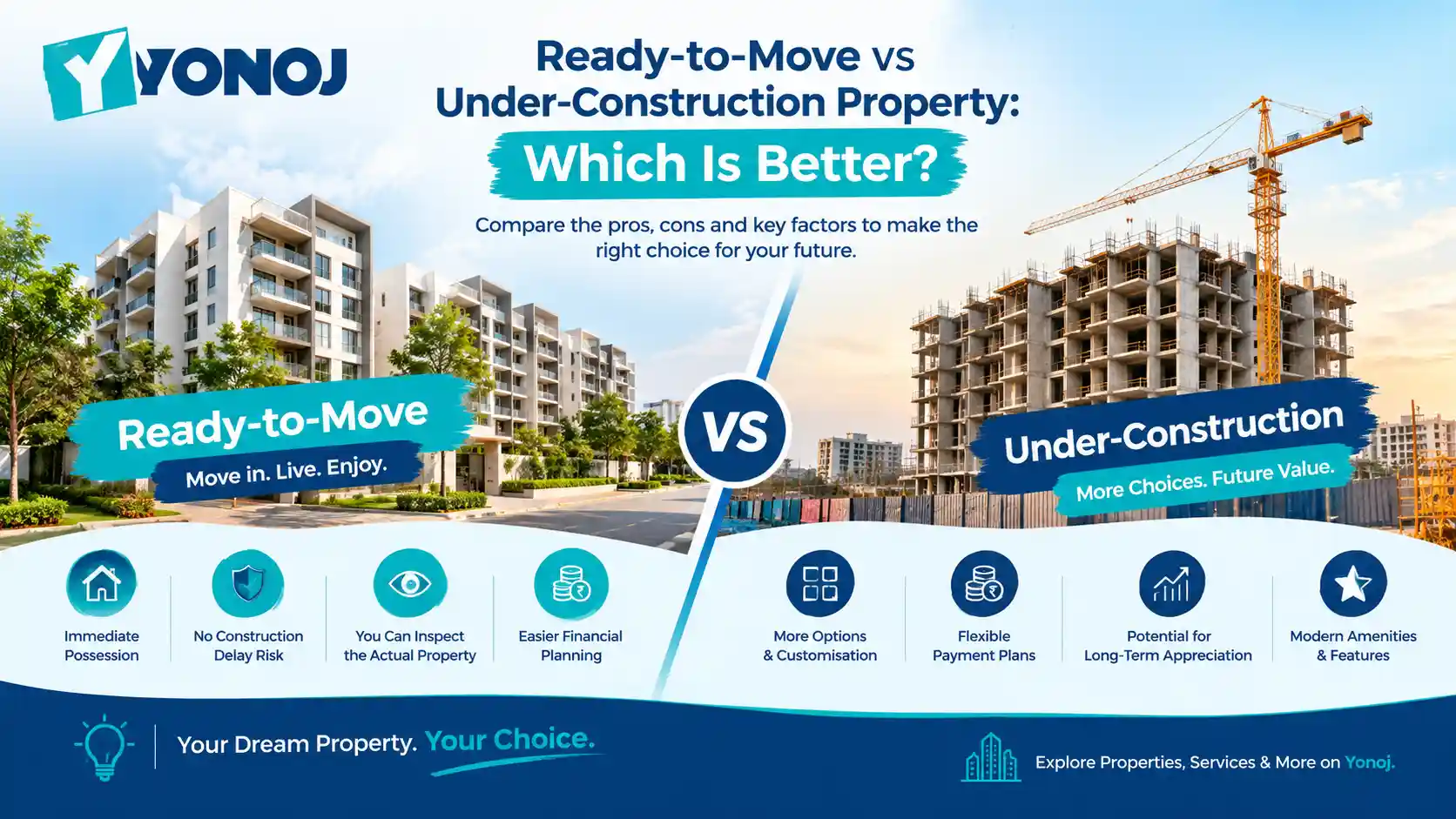
1. Immediate Possession
You generally do not need to wait for construction to finish. Once the purchase, registration, and other formalities are completed, you can plan your move.
2. No Construction Delay Risk
Since the property is already built, you avoid the uncertainty associated with ongoing construction and future possession dates.
3. Inspect the Actual Property
You can examine the rooms, ventilation, natural light, fittings, common areas, and surrounding neighbourhood before making a decision.
4. Easier Financial Planning
You can estimate your monthly expenses, maintenance charges, and moving costs more accurately because the property already exists.
5. Potential Rental Income Sooner
If you are buying for investment, you may be able to rent out the property after completing the necessary formalities and preparing it for tenants.
Disadvantages of Ready-to-Move Properties
- The initial purchase price may be higher than that of a comparable under-construction property.
- You may have fewer options to customise the layout or interior design.
- Older properties may require repairs, renovation, or plumbing and electrical upgrades.
- You must carefully verify ownership records, outstanding dues, approvals, and the property’s legal status.
What Is an Under-Construction Property?
An under-construction property is a residential unit that is still being built. Buyers often book these properties before construction is complete and pay according to the agreed payment schedule.
These projects may offer a wider selection of units, floors, views, or layouts. However, buyers must evaluate the developer, project approvals, construction progress, and expected possession date carefully.
Advantages of Under-Construction Properties
1. More Choices
Depending on the project’s stage, you may have more options regarding floor level, apartment size, view, and unit location.
2. Flexible Payment Schedule
Many developers offer construction-linked or milestone-based payment plans. This can help buyers plan their finances, although the exact terms depend on the agreement.
3. Modern Features and Amenities
New projects may include updated layouts, parking facilities, security systems, recreational spaces, and energy-efficient features.
4. Potential for Long-Term Appreciation
A property in a developing neighbourhood may appreciate as infrastructure and local facilities improve. However, appreciation is never guaranteed and depends on market conditions.
5. More Time to Prepare
If you do not need to move immediately, the construction period can give you time to arrange finances and plan your future home.
Disadvantages of Under-Construction Properties
- Construction or possession may be delayed.
- You cannot fully inspect the finished home before buying.
- The final product may differ from your expectations or the advertised presentation, subject to the agreement and applicable law.
- You may need to pay rent while also meeting home loan or property payment obligations.
- Changes in market conditions can affect the property’s resale value and investment returns.
Ready-to-Move vs Under-Construction Property: Key Differences
| Comparison Factor | Ready-to-Move Property | Under-Construction Property |
|---|---|---|
| Possession | Usually available after purchase formalities | Available after construction and required approvals |
| Construction risk | Lower, as construction is complete | Higher due to possible delays |
| Price | May have a higher upfront price | May offer a lower booking price, depending on the project |
| Inspection | Actual property can be inspected | Inspection is limited to the construction stage |
| Payment | Often a larger payment is needed around purchase and registration | Payments may be linked to construction milestones |
| Rental income | May begin sooner | Usually requires waiting until possession |
| Customisation | Often limited | Some options may be available during construction |
| GST | Generally not applicable to a completed property where the relevant completion or first-occupation conditions are met | GST may apply to taxable under-construction residential purchases |
| Main risk | Legal, structural, and title-related issues | Developer, delay, approval, and construction-related risks |
Prices, taxes, payment terms, and possession conditions depend on the individual property and applicable rules. Confirm the details before signing an agreement.
Which Property Is More Affordable?
The advertised price alone does not tell you which property is cheaper. You should compare the total cost of ownership.
For a ready-to-move property, calculate:
- Purchase price
- Stamp duty and registration charges
- Brokerage, if applicable
- Maintenance deposits and society charges
- Renovation and repair expenses
- Home loan processing and interest costs
For an under-construction property, calculate:
- Base price and booking amount
- Applicable GST
- Stamp duty and registration charges
- Parking, floor-rise, or other permitted charges
- Home loan interest during construction
- Rent paid while waiting for possession
- Interior work and moving expenses
For example, an under-construction apartment may have a lower advertised price, but GST and rent during construction can increase the total expense. A ready-to-move apartment may cost more initially but allow you to move in or start earning rent sooner.
Compare the complete costs over the same period before deciding.
Legal Checks Before Buying a Property
Whether you choose a completed home or an under-construction project, legal verification is essential.
Checklist for Ready-to-Move Properties
- Verify the seller’s ownership and title documents.
- Check the occupancy or completion certificate, where applicable.
- Confirm approved building plans and relevant local permissions.
- Check property tax, maintenance dues, and utility bills.
- Review the sale deed and any existing home loan or encumbrance.
- Inspect the building for cracks, leakage, plumbing issues, and electrical problems.
Checklist for Under-Construction Properties
- Check the project’s registration on the relevant state’s RERA website, where registration is required.
- Verify land title, project approvals, and sanctioned building plans.
- Review the developer’s track record and previous project delivery.
- Check the declared completion and possession timelines.
- Read the agreement for sale, payment schedule, cancellation terms, and delay provisions.
- Confirm the applicable tax treatment and all additional charges.
- Verify that payments are made through documented, legitimate channels.
Do not rely only on brochures, verbal promises, or promotional images. If necessary, ask a qualified property lawyer to review the documents before you commit.
Which Property Is Better for Homebuyers?
The better option depends on your circumstances.
Choose a ready-to-move property if:
- You need a home immediately or within a short period.
- You want to inspect the actual property before buying.
- You prefer less uncertainty about construction and possession.
- You want the possibility of earning rental income sooner.
- You have enough funds for the upfront purchase costs.
Choose an under-construction property if:
- You can wait until the expected possession date.
- You prefer a new project with modern amenities.
- The payment schedule fits your financial plan.
- You have carefully verified the developer and project approvals.
- You can manage rent, loan payments, and other expenses during construction.
Neither option is automatically the better investment. A well-located ready-to-move property can be a good choice, while a properly vetted under-construction project may also suit buyers with a longer time horizon.
Common Mistakes to Avoid
Before finalising a property, avoid these common mistakes:
- Choosing a property based only on its advertised price.
- Ignoring stamp duty, registration, taxes, and other charges.
- Failing to check the title and required approvals.
- Assuming that a developer’s promised possession date is guaranteed.
- Taking a home loan without calculating the full monthly financial commitment.
- Skipping a physical inspection of a completed property.
- Buying solely because an area is expected to appreciate.
Take time to compare several properties and keep copies of all payments, agreements, approvals, and communications.
Final Verdict: Ready-to-Move or Under-Construction?
When comparing ready-to-move vs under-construction property, the best decision depends on your priorities.
A ready-to-move home is often more suitable for buyers who value immediate possession, physical inspection, and greater certainty about the finished property. An under-construction home may suit buyers who can wait, want more unit choices, and are comfortable evaluating construction and developer-related risks.
Before making a final decision, compare the total cost, verify all legal documents, review the payment terms, and assess whether the property fits your long-term financial plans.
For more useful property and local-service information, visit Yonoj.
Frequently Asked Questions (FAQs)
1. Is a ready-to-move property better than an under-construction property?
A ready-to-move property is often better for buyers who need immediate possession and want to inspect the completed home. An under-construction property may suit buyers who can wait and have verified the project’s approvals and developer.
2. Is an under-construction property cheaper?
It may have a lower advertised price than a comparable completed property, but this is not always true. GST, rent during construction, loan interest, and additional charges should be included when comparing costs.
3. Is GST applicable to ready-to-move properties?
GST generally does not apply to the sale of a completed property when the relevant completion-certificate or first-occupation conditions are met. Tax treatment depends on the transaction and applicable rules, so confirm the details with a qualified tax professional.
4. Can I get a home loan for an under-construction property?
Yes. Many banks and housing finance companies offer loans for eligible under-construction properties. Disbursements may be linked to construction progress, and the lender will assess your eligibility and the project’s documentation.
5. What should I check before buying an under-construction property?
Check RERA registration where required, title documents, approvals, the developer’s track record, construction progress, payment terms, possession timelines, and the agreement for sale.
6. Which property is better for rental income?
A ready-to-move property may generate rental income sooner because it is already built. An under-construction property usually cannot be rented until it is completed and possession is available.
7. Can an under-construction property be a good investment?
It can be, provided the location, price, developer, approvals, and expected demand are carefully evaluated. Future appreciation and rental returns are not guaranteed.
8. What is the safest way to buy a property in India?
Verify the title, approvals, relevant RERA records, payment terms, and tax obligations. Inspect completed properties and seek independent legal advice before signing or paying a substantial amount.